Before entries follow the three step, a pending order at OB wont work and even than price can hit SL, use stop loss.
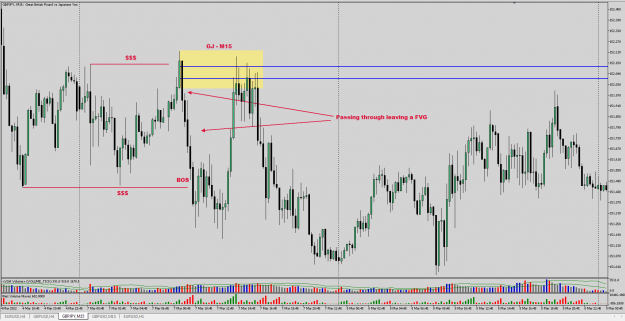
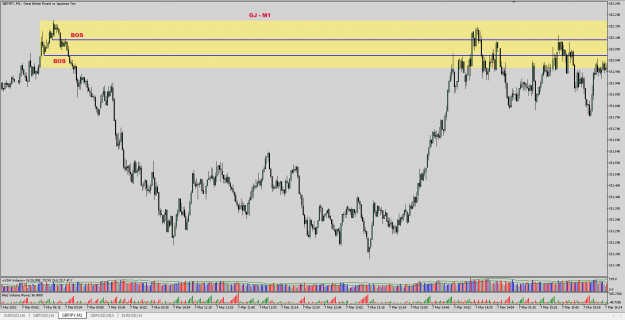
1. look for a liquidity grab / Imbalance rebalance2. wait for a BOS (break of structure) with a FVG
3. then Retest of OB (order block) is our entry.
..................................................
ICT defines the two major time zones as:
(1) London 0200 hrs. - 0500 hrs. NY Time
(2) New York 0700 hrs. - 1000 hrs. NY Time
I believe he defines the Asian time zone as 2300 hrs. - 0200 hrs. NY Time.
Keep in mind that he is not saying these are the only times the markets are open, these are just the times when he is looking to see what he is looking to see (FVGs, Liquidity Runs, Market Structure Points, Significant Highs and Lows, etc.)
And for the indices, he would also include 0830 hrs. - 1200 hrs. NY Time. and 1330 hrs. - 1615 hrs. NY Time.
(1) London 0200 hrs. - 0500 hrs. NY Time
(2) New York 0700 hrs. - 1000 hrs. NY Time
I believe he defines the Asian time zone as 2300 hrs. - 0200 hrs. NY Time.
Keep in mind that he is not saying these are the only times the markets are open, these are just the times when he is looking to see what he is looking to see (FVGs, Liquidity Runs, Market Structure Points, Significant Highs and Lows, etc.)
And for the indices, he would also include 0830 hrs. - 1200 hrs. NY Time. and 1330 hrs. - 1615 hrs. NY Time.
-----------------------
To simplify - If one wants to trade
1) London killzone - start looking trading opportunities 7am London time - 1h before official session open and be aware that alot more volume comes in when it opens officialy - (8am London Local Time).
2) If one wants to trade NY killzone - start looking trading opportunities 7am NY time - 1h before official session open and be aware that alot more volume comes in when it opens officialy - (8am NY Local Time).
Also with NY gotta keep in mind NY Stock Exchange open, (09:30 local NY time) - even more volume. So NY has kind of like a 2 official sessions.
If theres no opportunities on first hour of the killzone then one can wait for official session open to look for more/cleaner confirmations and being aware that first session official hour can be trap move (but not always, sometimes also countinuation) to get traders on the wrong side of the market.
1) London killzone - start looking trading opportunities 7am London time - 1h before official session open and be aware that alot more volume comes in when it opens officialy - (8am London Local Time).
2) If one wants to trade NY killzone - start looking trading opportunities 7am NY time - 1h before official session open and be aware that alot more volume comes in when it opens officialy - (8am NY Local Time).
Also with NY gotta keep in mind NY Stock Exchange open, (09:30 local NY time) - even more volume. So NY has kind of like a 2 official sessions.
If theres no opportunities on first hour of the killzone then one can wait for official session open to look for more/cleaner confirmations and being aware that first session official hour can be trap move (but not always, sometimes also countinuation) to get traders on the wrong side of the market.
-----------------------

..............
Feel free to build/develop Your own system that You like, only a certain type of price behaviour You wanna see, that You know that fits Your personality and only trade that what You can see, what might work for me might not suit for You.
ICT talked about Your "bread & butter" setup constantly in hes older videos thats uniquely Yours in its own way - once it clicks and once You find it/develop it further, then You only know what Youre looking for .. like you see it, its there and thats all You need, just 1 move Youre looking for and that 1 move can build Youre whole trading career! Be it OTE, Judas swing, higher timeframe breaker block setup, only a certain session liquidity grab followed by LTF BOS & retest, daily candle raid, LTF equal lows/high liquidity range setup, whatever it is. Go find it, backtest, forwardtest and make it uniquely Yours that You can follow and take without hesitation!
ICT talked about Your "bread & butter" setup constantly in hes older videos thats uniquely Yours in its own way - once it clicks and once You find it/develop it further, then You only know what Youre looking for .. like you see it, its there and thats all You need, just 1 move Youre looking for and that 1 move can build Youre whole trading career! Be it OTE, Judas swing, higher timeframe breaker block setup, only a certain session liquidity grab followed by LTF BOS & retest, daily candle raid, LTF equal lows/high liquidity range setup, whatever it is. Go find it, backtest, forwardtest and make it uniquely Yours that You can follow and take without hesitation!
...............
It is not necessary to mark a daily candle and inside that h4, and H1 then m30 till m1
Simplest is mark htf only and wait price to reach there and see the reaction and capitalize it. I.e, weekly, daily, h4 or m15 choose any one you like.
What you have to mark:
- imbalances as price comes back to rebalance them, wait for a bos and return to ob is entry
- Order blocks, breaker blocks, as price sweeps them for Liquidity, but when respects wait for a bos and retrum to ob is entry (then price creates new imbalances)
Simplest is mark htf only and wait price to reach there and see the reaction and capitalize it. I.e, weekly, daily, h4 or m15 choose any one you like.
What you have to mark:
- imbalances as price comes back to rebalance them, wait for a bos and return to ob is entry
- Order blocks, breaker blocks, as price sweeps them for Liquidity, but when respects wait for a bos and retrum to ob is entry (then price creates new imbalances)
...............

No comments:
Post a Comment